The Memetic Engine: How Pop Culture Actually Spreads, Mutates, and Rules the Internet
From Barbenheimer's guerrilla sync to VTuber lore engines, here is the hidden machinery turning niche fandom obsessions into global monoculture.
 Yuna ParkStyle editor
First published 11/2/2026 · last revised 11/3/2026 with fresh sources, corrections, and new context. Reader corrections are reviewed and folded into future versions.
Summary
Culture is neither an accident of genius nor a passive conveyor belt operated by Hollywood executives; it is an open-source feedback loop driven by participatory friction. Modern canon forms when industrial media leaves deliberate narrative gaps, daring hyper-online audiences, streamers, and video essayists to colonize the negative space. Whether analyzing how a discarded Sonic design forced a multi-million-dollar visual overhaul or how a Minecraft roleplay server birthed global streaming dynasties, cultural momentum requires audience authorship to survive. In the algorithmic era, you do not consume culture—you remix, signal-boost, and co-produce it into reality.
Key takeaways
- Culture spreads through memetic transmission and participatory loops rather than top-down broadcast mandates.
- Audience intervention now dictates studio production pipelines, turning fans from passive consumers into active canon-builders.
- Algorithmic curation incentivizes high-velocity subcultural micro-genres over sustainable mass monoculture.
- Narrative negative space acts as fertile soil for fanfiction, theorycrafting, and streaming discourse that keeps franchises alive.
- Irony and semiotic decay accelerate trends from genuine community affection to corporate commodification in record time.
Explain like I'm 5
Imagine pop culture as a massive, never-ending schoolyard game of tag, but instead of tagging people, everyone is passing around an inside joke. A movie studio or game developer does not get to decide which joke becomes legendary; they just toss a toy into the yard. If the toy is weird, fun, or broken, kids grab it, paint over it, make up wild stories about it, and invent new rules on the fly. Once enough people start chanting the joke together—on TikTok, Discord, or Twitch—it stops belonging to the toy maker and becomes part of the schoolyard identity. Real culture only happens when the audience grabs the microphone and refuses to hand it back.
Deep dive
{"blocks":[{"h2":"The Myth of the Monolith: Why Broadcast Culture Died","text":"For over half a century, the entertainment complex functioned like a brutalist radio tower: a handful of studio heads, network gatekeepers, and music executives calibrated three television channels and a dozen summer blockbusters for a largely captive public. That broadcast hegemony dissolved the moment consumer hardware doubled as production hardware. Today, cultural velocity is dictated entirely by bottom-up transmission. When Sony greenlit 'Morbius' back into theaters in June 2022 after millions of ironic 'It\'s Morbin\' Time' tweets, the studio failed to understand the foundational law of decentralized culture: audience irony is not box-office loyalty. The public was not celebrating the cinematic text; they were celebrating their own collective vandalism of corporate intellectual property. Culture is no longer delivered as a finished artifact; it is treated as raw material waiting for participatory repurposing."},{"h2":"Canon Negotiation and the Sonic Paradigm Shift","text":"Nowhere is this dialectic sharper than in modern fandom's ability to rewrite commercial products in real time. In April 2019, Paramount dropped the first trailer for 'Sonic the Hedgehog,' featuring a hyper-realistic, human-toothed blue blur that incited universal revulsion across YouTube and Reddit. In an unprecedented surrender, director Jeff Fowler and the production team delayed the film by three months to completely redesign the character based on fan illustration templates. This was not mere social listening; it was an explicit renegotiation of franchise canon. Fandoms no longer submit to developer or director supremacy. From the community-led resurrection of 'No Man\'s Sky' through thousands of Reddit patch requests to the fan-driven canonization of background extras in anime like 'Chainsaw Man,' culture has shifted from monarchic distribution to collaborative negotiation."},{"h2":"Subcultural Arbitrage and the VTuber/Streamer Ecosystem","text":"Traditional entertainment operates on scarcity, but internet culture thrives on social presence and infinite shelf space. Consider how agency-backed VTubers like Hololive talent or independent livestreamers like Kai Cenat and xQc manufacture reality within their micro-empires. They do not merely broadcast gameplay; they orchestrate continuous reality television where audience chat functions as a live writer's room. A bizarre inside joke uttered during an eight-hour Elden Ring stream metastasizes into custom Twitch emotes, fan animations on YouTube within twelve hours, and eventual global TikTok audio tracks within forty-eight. This is subcultural arbitrage: taking raw, unfiltered community sentiment and packaging it through platform tools until it spills out of niche Discord servers and dominates main-stage brand marketing campaigns."}]}
Glossary
- Memetic Transmission
- The process by which cultural artifacts, inside jokes, and stylistic motifs replicate and mutate across networks via human mimicry and variation.
- Participatory Culture
- An environment where fans and audiences act as contributors, remixers, and co-creators rather than passive viewers.
- Semiotic Decay
- The dilution of an original creative symbol or meme as it reaches mainstream saturation and corporate imitation.
- Lore Engine
- An ongoing intellectual property framework designed with deliberate narrative gaps that provoke community theorycrafting.
- Negative Space Canon
- Story elements intentionally left unexplained by creators to encourage audience fanfiction and speculative discourse.
- Subcultural Arbitrage
- Extracting aesthetics or vernacular from insular online spaces to repackage them for broader algorithmic appeal.
FAQs
Can movie studios or game publishers force something to become a cultural phenomenon?+
No. Corporate entities can buy high visibility and ad placements, but they cannot manufacture genuine organic virality. If an audience senses an orchestrated mandate without room for creative play or irony, the project usually meets immediate cultural rejection.
How did 'Barbenheimer' succeed when both films were diametrically opposed?+
It succeeded precisely because of the stark aesthetic contrast, which provided perfect raw material for creative fan mashups. Audiences engineered the dual-screening meme organically, and the studios were smart enough to stay out of the way rather than over-policing the trend.
Why do internet trends burn out faster today than twenty years ago?+
Algorithmic recommendation engines like TikTok and YouTube Shorts compress cultural lifecycles by accelerating saturation. What once took months to circulate college campuses is now processed, commercialized, and rendered uncool within ten days.
What role do video essayists play in shaping modern film and game canon?+
Video essayists function as culture's intellectual curators, turning scattered community reactions into coherent critical frameworks. Long-form creators on YouTube can resurrect overlooked titles or re-contextualize cinematic flops into celebrated cult classics.
Is streaming media making monoculture impossible?+
Not impossible, but significantly rarer and far more episodic. Unified watercooler moments now require simultaneous algorithmic alignment across multiple social platforms, rather than just high linear television ratings.
How does streamer chat shape ongoing internet culture?+
Streamer chat operates as a real-time linguistic incubator where micro-slang, reaction clips, and narrative running gags are stress-tested. The most resilient memes bleed out into Twitter, TikTok, and general youth vernacular within days.
Predictions
- Generative media tooling will decentralize fan fiction into playable, custom-rendered cinematic spin-offs within four years.
- Studios will begin contracting top fan animators and meme curators into creative direction teams to prevent catastrophic launch blowback.
- Algorithmic saturation will spark intentional 'dark forest' fandom migration into gated Discord networks and private bulletin boards.
- Interactive live-streaming engines will routinely surpass static feature films in both audience retention and consumer licensing revenues.
Risks
- Accelerating semiotic burnout leaves new intellectual properties insufficient time to cultivate genuine multi-generational affinity.
- Corporate algorithmic over-optimization flattens artistic risk into sterile, fan-service checklist manufacturing.
- Aggressive DMCA enforcement and IP over-protection risk alienating the dedicated super-fans who keep niche franchises relevant.
- Echo-chamber polarization can lead fandom communities into weaponized harassment campaigns when narrative canon diverges from expectations.
For professionals
For entertainment operators, game directors, and creative strategists, surviving the modern cultural ecosystem demands treating intellectual property as a protocol rather than a walled garden. Traditional brand stewardship prioritized canonical rigidity, legal fencing, and standardized downstream merchandise. Today, asset valuation is linked directly to cultural surface area—the degree to which an asset invites fair-use adaptation, video essays, competitive streaming, and derivative social audio tracks. The winning play is establishing a high-fidelity foundational core while leaving generative fringes deliberately unresolved. Production houses must build structured pipelines for community feedback, cultivate authentic relationships with leading platform creators, and recognize when public irony is an invitation to engage rather than an existential threat. When audiences co-sign your IP through creative labor, marketing costs drop to zero and cultural durability becomes self-sustaining.
Sources & references
- Convergence Culture: Where Old and New Media Collide by Henry Jenkins
- The Sonic the Hedgehog Redesign and Internet Labor Dynamics (The Ringer)
- Memetic Warfare and Irony Loops in Post-Digital Cinema (Film Quarterly)
- How VTubers and Creator Collectives Broke Algorithmic Entertainment (Polygon)
- The Economics of Attention and Platform Fandom (MIT Press)
| Broadcast Monolith Era (1950–2005) | Participatory Network Era (2006–Present) | |
|---|---|---|
| Origination Vector | Top-down via studio suites, broadcast networks, and record labels | Bottom-up via creators, streamers, clip channels, and Discord communities |
| Audience Role | Passive viewers, rating statistics, and physical ticket buyers | Active remixers, fan canonizers, critics, and co-producers |
| Feedback Velocity | Months to years via box-office returns and mail-in surveys | Seconds to hours via chat sentiment, reaction videos, and algorithm shifts |
| Canon Control | Strictly gatekept by studio writers and corporate legal teams | Collaboratively contested and shaped through vocal fandom consensus |
| Monetization Engine | Direct unit sales, syndicated broadcasting rights, and linear ads | Ecosystem subscriptions, community patronage, and creator licensing |

Turn cuts, camera moves, sound cues, and mise-en-scène into playable discoveries—then use the results to make sharper videos, streams, games, and fandom conversations.

Why one frozen image can make a viewer feel danger, curiosity, nostalgia, or FOMO—and how creators can turn that split-second reaction into an honest click.
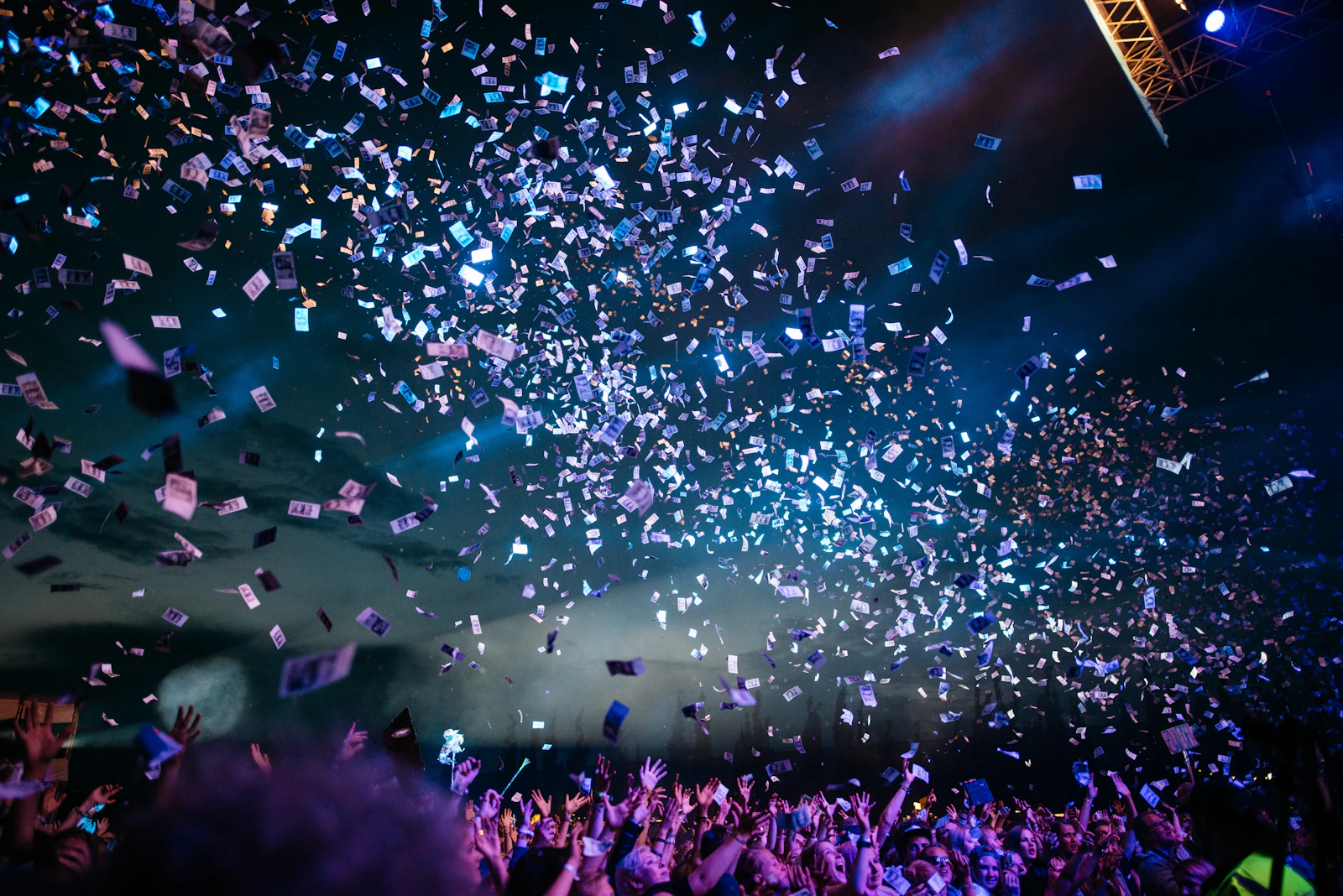
Cult entertainment once gathered after dark in sticky-floor theaters. Now it erupts through edits, reaction streams, fancams, memes, mods, and algorithmic rabbit holes—turning audiences into performers, distributors, archivists, and sometimes co-authors.

Dynasties, betrayals, miracle runs, villain edits, redemption arcs: competitive gaming has become a global story engine where the audience helps write the script.

A single reveal, needle drop, reaction face, or impossible shot can transform a trailer from an advertisement into raw material for millions of fan-made posts. Here is how creators engineer—and communities amplify—the moment everyone has to share.

Chasing the algorithmic monoculture or building a bulletproof niche fandom? Every creator, game dev, and studio faces invisible trade-offs that determine their survival.
From our own rounds
Measured on CineMind, from real sessions people played on this site — not a third-party dataset.
- Rounds played here
- 10
- Questions per round
- 1
Most-played topics right now: AI (2), Streamers (1), Cartoons (1).
Play a round and add to these numbers